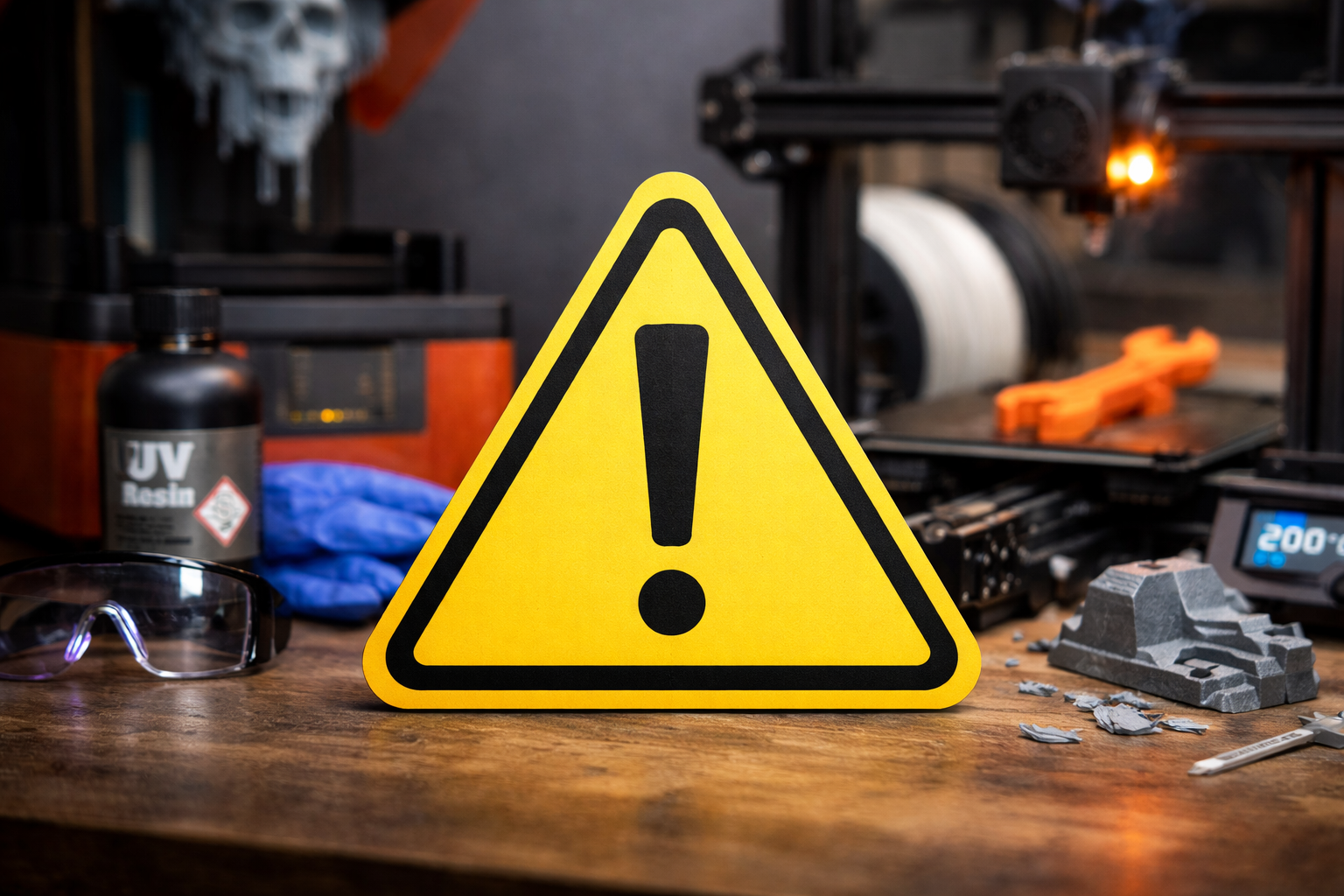
Important note: This article is written in a more formal and strict tone than most other articles on MakerMyths. The topic involves materials, processes, and exposures that should be taken seriously. The goal is to encourage careful thinking and informed decision-making when working with both resin and FDM 3D printing technologies. The content is observational and explanatory, not instructional.
Resin 3D printing is often described as dangerous, toxic, or unsuitable for beginners. In contrast, FDM printing is commonly seen as safe and simple. This difference in reputation creates confusion, especially for new users. This article examines whether resin printing is truly more dangerous than FDM, and in what ways the two technologies differ.
The comparison focuses on commonly observed risks, practical differences, and widely accepted community understanding. It does not provide safety instructions. Instead, it explains how each technology behaves and what factors influence perceived risk.
Basic Difference Between Resin and FDM Printing
FDM printing uses solid plastic filament that is melted by heat and deposited layer by layer. Resin printing uses a liquid photopolymer that hardens when exposed to light.
This fundamental difference affects how materials are handled, how they behave during printing, and what kinds of exposure are possible.
Material State and Direct Contact
Uncured resin is a liquid chemical. Direct contact with skin is commonly reported to cause irritation in some users. This observation is widely reported across hobbyist communities and aligns with the chemical nature of photopolymers.
FDM filament is a solid plastic at room temperature. It is generally inert when handled. Contact-related issues with FDM usually involve hot components, such as the nozzle or heated build plate, which operate at temperatures around 180–260 °C depending on the material.
- Resin printing involves contact with a reactive liquid.
- FDM printing involves contact with hot mechanical parts.
Fumes and Airborne Emissions
Both technologies produce airborne emissions, but their nature differs.
Resin printing releases vapors from liquid photopolymers. These vapors are often noticeable by smell and are commonly described as sharp or irritating. The intensity varies by resin type, print duration, and room airflow.
FDM printing releases fumes and very fine particles when plastic is heated. The amount and type depend on the filament material and printing temperature. Some filaments produce mild odors, while others produce stronger smells that users may find uncomfortable.
Community measurements and reports suggest that emissions from both technologies increase with longer print times, higher temperatures, and poor airflow. Results vary widely, so exposure levels are better described as ranges rather than fixed values.
Post-Processing Differences
Resin prints require additional steps after printing. Fresh prints are typically sticky and contain uncured material on the surface. They are commonly washed in a liquid solvent and then exposed to light to fully harden.
FDM prints usually leave the printer fully solid. Post-processing typically involves mechanical actions such as removing supports, trimming excess material, or sanding.
- Resin post-processing involves liquids and chemical residues.
- FDM post-processing mainly involves solid plastic debris.
A basic curing chamber is often used for resin prints.
Cleanup and Waste Characteristics
Cleanup behavior is another major difference.
Resin spills remain liquid and sticky until cured. Paper towels, gloves, or containers contaminated with liquid resin are commonly treated as chemical waste until hardened.
FDM waste consists mostly of solid plastic scraps and failed prints. These are generally dry, non-reactive, and easier to store or discard.
This difference strongly influences how users perceive risk, even when actual exposure levels vary.
Community Observations and Practical Reality
Many users describe resin printing as feeling more hazardous. This perception comes from the combination of strong odors, liquid chemicals, and required cleanup steps.
FDM printing feels safer to many users because the material is solid and familiar. However, the presence of high temperatures and long operating times introduces different types of risk.
From a physical perspective:
- Resin risks are linked to chemical exposure.
- FDM risks are linked to heat and airborne particles.
Neither system is risk-free. The risks are different in nature rather than strictly higher or lower.
Is Resin Printing Actually More Dangerous?
Based on widely reported experiences and material behavior, resin printing is not universally more dangerous than FDM. It is more sensitive to handling and environmental conditions.
Resin printing concentrates risk in fewer areas, such as liquid contact and fumes. FDM printing spreads risk across heat, motion, and long-duration heating of plastics.
How dangerous either process becomes depends on setup, awareness, and habits rather than the technology alone.
Key Takeaways
- Resin and FDM printing involve different types of exposure.
- Resin uses liquid chemicals; FDM uses heated solids.
- Resin odors are usually stronger and more noticeable.
- FDM risks are often underestimated due to familiarity.
- Neither technology should be treated casually.
Understanding these differences helps users think critically about how and where they use each technology. This awareness is more important than choosing one method based on fear or reputation.